
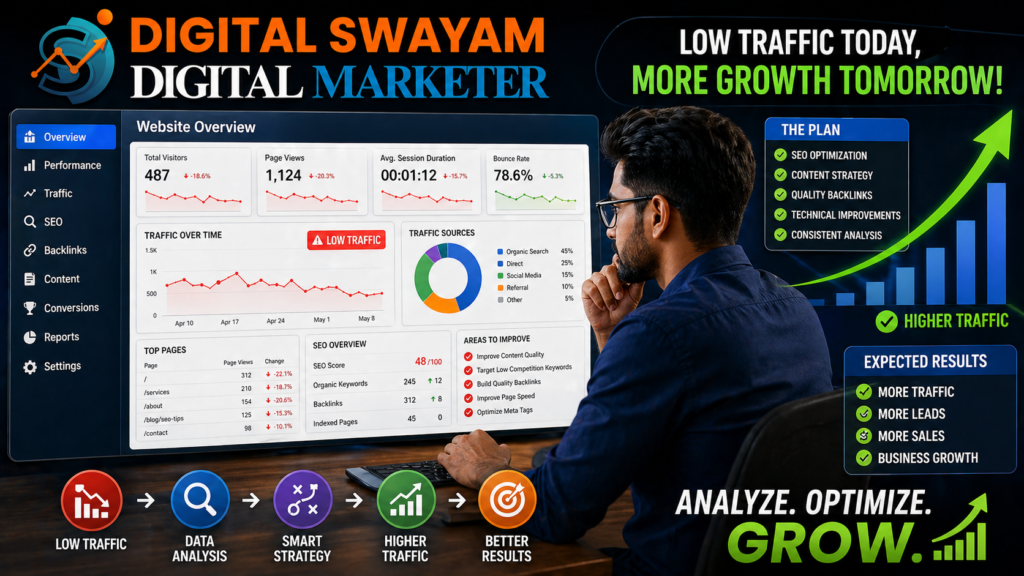
Many businesses invest time and money into creating a website, expecting it to automatically bring in traffic and leads. However, in reality, simply having a website is not enough. A website without a proper digital strategy often remains invisible to potential customers. In most cases, the issue is not the design or existence of the website, but the lack of planning, optimization, and promotion behind it. Without the right approach, even a well-designed website can fail to attract visitors or generate meaningful results.
One of the most common reasons for low website traffic is poor keyword targeting. Search engines like Google rely heavily on keywords to understand what your website is about. If your content does not include the words and phrases that your target audience is actually searching for, your website will struggle to appear in search results. Many businesses make the mistake of using generic or irrelevant keywords, or sometimes not using keywords strategically at all. Effective keyword research is essential because it helps align your website content with real user intent, increasing the chances of visibility.
Another major factor that affects traffic is the quality of content. Search engines prioritize websites that provide valuable, relevant, and detailed information. If your website has weak, thin, or outdated content, it is unlikely to rank well. Content should not just exist for the sake of filling pages—it should answer questions, solve problems, and provide insights that users are actively looking for. High-quality blog posts, guides, and service pages can significantly improve your chances of ranking higher and attracting organic traffic. Additionally, regularly updating your content signals to search engines that your website is active and relevant. If your website isn’t getting traffic, understanding Competitor SEO Analysis and gaining hands-on knowledge through a Digital Marketing Courses in Mumbai can help you identify and fix SEO issues.
Technical issues are another critical reason why many websites fail to perform. Even if your content is strong, poor technical performance can hold your website back. Slow loading speed is a major issue, as users tend to leave a site if it takes too long to load. Mobile responsiveness is equally important, especially since a large portion of users browse the internet on their smartphones. Broken links, confusing navigation, and poor site structure can negatively impact both user experience and search engine rankings. A well-optimized website should be fast, easy to navigate, and accessible across all devices.
In addition to on-page and technical factors, lack of promotion also plays a significant role in low traffic. Many businesses create a website but do not actively promote it. Without promotion, it becomes difficult for people to discover your content. Sharing your website through social media platforms, building backlinks from other reputable websites, and using content marketing strategies are essential for increasing visibility. Backlinks, in particular, act as signals of trust and authority, helping search engines recognize your website as credible.
Another overlooked aspect is consistency. SEO and digital marketing are not one-time efforts—they require ongoing work. Many businesses expect quick results and lose patience when they don’t see immediate traffic growth. In reality, building traffic through SEO takes time, consistency, and continuous optimization. Regularly publishing content, monitoring performance, and making improvements based on data are all part of a successful long-term strategy.
The solution to low website traffic lies in building a strong and well-rounded digital strategy. This starts with proper SEO implementation, including keyword research, on-page optimization, and technical improvements. It also involves creating high-quality, user-focused content on a regular basis. Alongside this, promoting your website through various digital channels helps expand your reach and attract a wider audience.
When all these elements work together, your website transforms from a static online presence into a powerful business tool. Instead of being invisible, it starts attracting the right audience, generating consistent traffic, and converting visitors into leads or customers. With the right strategy, patience, and execution, any website has the potential to grow and become a reliable source of long-term business success.
Conclusion – To achieve sustainable organic growth, start with a detailed Competitor SEO Analysis and develop practical skills.