
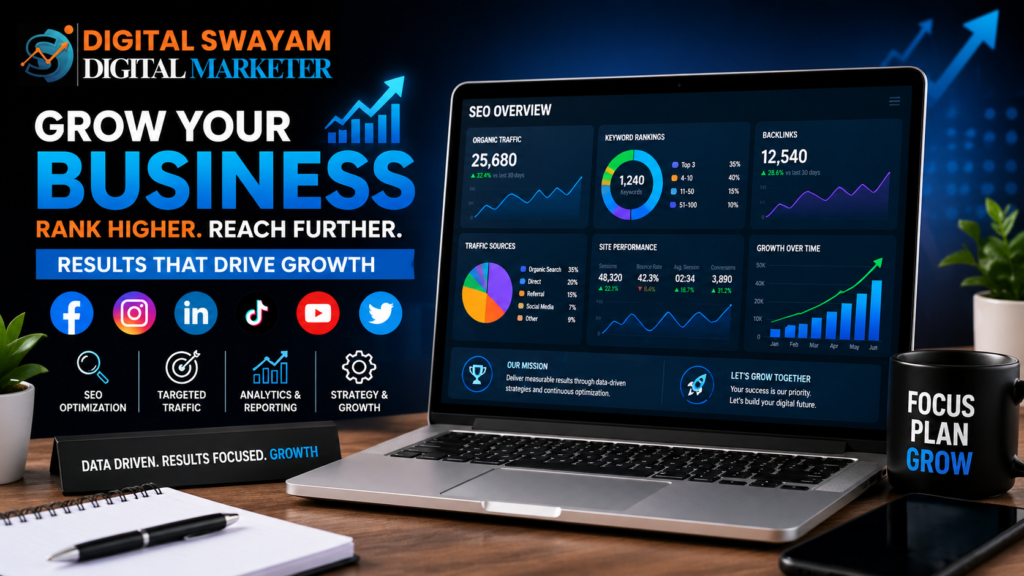
In the modern business world, digital marketing has become one of the most powerful drivers of growth. As technology evolves and customer behavior shifts online, businesses that fail to establish a strong digital presence often struggle to stay competitive.
Consumers now rely heavily on the internet to discover products, compare services, read reviews, and make buying decisions. Whether someone is looking for a local service provider, an e-commerce product, or professional consultation, their journey usually starts online. This is why digital marketing is no longer optional—it is essential.
Digital marketing allows businesses to reach their target audience where they spend most of their time: on search engines, social media platforms, websites, and email. It includes a variety of strategies such as search engine optimization (SEO), social media marketing, content marketing, email marketing, and paid advertising. Together, these channels create a comprehensive online presence that attracts visitors, generates leads, and drives sales.
One of the biggest advantages of digital marketing is its ability to target specific audiences. Traditional marketing methods such as newspaper ads, radio promotions, or billboards often reach broad audiences without precision. While these methods may create awareness, they lack targeting efficiency.
Digital marketing, on the other hand, enables businesses to reach users based on demographics, location, interests, online behavior, and search intent. For example, if a business wants to target users searching for “best digital marketing services,” SEO can help the website appear in search engine results for that specific keyword. Similarly, paid advertising platforms allow businesses to show ads only to users who match their target audience profile.
This targeted reach increases the chances of attracting relevant visitors who are genuinely interested in the products or services being offered. As a result, businesses can generate higher-quality leads and improve conversion rates.
Another reason digital marketing is crucial is measurability. One of the limitations of traditional marketing is the difficulty in tracking results. Businesses often invest in offline campaigns without clear insights into what is working.
Digital marketing solves this problem by providing measurable data. Businesses can monitor website traffic, bounce rates, user behavior, ad performance, conversion rates, and customer engagement in real time. This data-driven approach allows marketers to optimize campaigns for better results.
For instance, if a Google Ads campaign is generating clicks but not conversions, the strategy can be adjusted immediately. If a blog post is attracting significant traffic, businesses can analyze what makes it successful and replicate that approach.
This ability to track and refine campaigns improves efficiency and maximizes return on investment, making digital marketing one of the most cost-effective growth strategies available.
Brand visibility is another major benefit. In a competitive market, visibility determines whether customers discover your business or your competitor’s. A well-executed digital marketing strategy ensures that your business appears consistently across multiple channels.
When potential customers see your brand on Google, social media, blogs, and online ads, it increases familiarity. Repeated exposure builds recognition, and recognition builds trust. Customers are more likely to choose brands they have seen regularly and perceive as credible.
This is especially important for small businesses and startups. Without a strong digital presence, even excellent products or services may remain unnoticed. Digital marketing helps smaller businesses compete by increasing visibility and building credibility.
Search engine optimization plays a central role in this process. SEO helps websites rank higher on search engines for relevant keywords. Higher rankings mean greater visibility, more organic traffic, and increased opportunities for conversions.
For example, if a freelance digital marketer optimizes their website for keywords like “freelance digital marketing expert” or “SEO services for small businesses,” they increase the chances of attracting users searching for those services. This organic traffic often brings highly qualified leads because users are actively searching for solutions.
Unlike paid advertising, SEO offers long-term benefits. A well-ranked page can continue driving traffic for months or years, making it a sustainable source of business growth.
Content marketing also contributes significantly to growth. By publishing valuable blog posts, guides, case studies, and educational content, businesses can establish authority in their industry. Helpful content not only improves SEO but also builds trust with visitors.
When users find informative and relevant content on your website, they are more likely to view your business as knowledgeable and reliable. This trust influences buying decisions and encourages visitors to take action.
For freelance digital marketers, content marketing is especially valuable because it showcases expertise. Writing informative articles about SEO, paid advertising, or social media marketing demonstrates knowledge while attracting organic traffic.
Social media marketing further strengthens digital growth by helping businesses engage directly with their audience. Platforms like Instagram, Facebook, LinkedIn, and X allow brands to build relationships, share updates, and create community engagement.
Social media increases visibility while humanizing the brand. It provides opportunities for businesses to communicate directly with customers, answer questions, and build trust through consistent interaction.
Paid digital advertising is another essential component. While SEO builds long-term traffic, paid ads deliver immediate visibility. Platforms like Google Ads and Facebook Ads allow businesses to reach their target audience quickly.
These ads can be optimized for various goals, including website visits, lead generation, product sales, and brand awareness. Because targeting is highly specific, businesses can maximize their advertising budget while reaching users most likely to convert.
Another major advantage of digital marketing is scalability. Businesses can start with small budgets and expand as they grow. Whether investing in SEO, content marketing, or paid ads, digital strategies can be adjusted based on performance and business goals.
This flexibility makes digital marketing accessible to businesses of all sizes. Startups can begin with content and SEO, while larger businesses can scale campaigns through paid media and advanced automation. You can also learn how Competitor SEO Analysis helps businesses improve their rankings.
Customer behavior has changed dramatically in recent years. Buyers expect brands to be visible online, responsive on social media, and informative through content. Businesses that fail to meet these expectations risk losing credibility and relevance.
Digital marketing ensures that businesses remain accessible throughout the customer journey—from awareness to conversion. It creates opportunities to attract, nurture, and convert customers efficiently.
In 2026 and beyond, the importance of digital marketing will only continue to grow. Online competition is increasing, customer expectations are evolving, and technology is creating new marketing opportunities.
Businesses that invest in digital marketing today position themselves for long-term success. They gain visibility, attract qualified leads, build stronger customer relationships, and improve profitability.
For businesses aiming to grow sustainably, digital marketing is not simply a promotional tool—it is a growth engine.
Whether through SEO, content marketing, social media, or paid advertising, the right digital marketing strategy can transform online presence into measurable business results.
For freelancers, entrepreneurs, and brands looking to grow in the digital age, investing in digital marketing is one of the smartest decisions they can make.
Conclusion: This article is based on concepts I learned while pursuing an Advanced Digital Marketing Course at Grow Digital Institute.